
Projected vs Actual Release
A projected release date is an estimate or scheduled date held by the custody system. An actual release date is the date and time the person left that custody. In Weld County, those two dates may come from different places. The Weld County Daily Inmate Released Report records the actual end of Weld County Jail custody for a booking. CDOC records can show state prison time-computation information, parole eligibility, parole action, or discharge. A court record can show sentence start, time served, probation, or an amended mittimus.
The same date can also mean different things in different systems. A county jail release date means Weld County Jail custody ended for that booking. A parole eligibility date means the person may be considered under state law. A mandatory release date, discharge date, or projected prison date may be based on a different calculation. For that reason, the phrase projected release date should always be tied to the source that produced it.
Scheduled vs actual: A projected release date can move. The actual Weld County release date is confirmed after custody changes, usually through the Daily Inmate Released Report, CDOC, VINE, or an official records request.
Pretrial custody is different from a sentence. A person held before disposition usually does not have a sentence-based release date. Release may depend on bond posting, personal recognizance terms, court review, holds from other agencies, or a transport order. If a person has been sentenced to county jail, Work Release, community corrections, state prison, or federal custody, the date question shifts to sentence computation and agency records.
Find Weld Projected Release
The first step is to decide which system has the sentence. A Weld County Jail booking record can end with bond, time served, pretrial supervision, transport, or another clearance. A transport to DOC means the state prison system becomes the main release-date source. A work-release placement may still be a local sentence placement. A federal sentence must be checked through BOP, not the sheriff.
- Search the Weld County Daily Inmate Released Report for a known release date, name, or booking event. Use it to confirm actual Weld jail release.
- If the person is still in custody or recently booked, use Colorado VINE through VINELink for current custody status and release alerts.
- If the case became a state prison sentence, use CDOC Offender Search. Search by DOC number when available, or by name and gender.
- For a county sentence, Work Release placement, or time-served question, check the court mittimus and ask the Weld County Sheriff's Office Records Unit or the court clerk for the official record.
- For a federal sentence, use the BOP Inmate Locator and read the federal release-date notes on the BOP records page.
The Weld County released inmates search path is strongest when the booking number, case number, date of birth, and custody type are matched before a date is treated as final. Name-only searches can return the wrong person, and an empty CDOC result may only mean the person never entered state prison.
Use the release clearance field when the Weld County Daily Inmate Released Report is available. A PR bond, surety bond, pretrial release, transport, or other clearance describes why county custody ended. It does not always answer the sentence-time question. A transport entry, for example, may point to another agency and a new date source. A bond entry may point back to the court calendar rather than a sentence calculation.
CDOC Release Date Fields
The Colorado Department of Corrections Offender Search is the state-prison source for a Weld County case that resulted in a DOC commitment. The public form searches by DOCNO, last name, first name, and gender. CDOC also includes a Par. Board tab for parole-board activity. The public form itself does not show every profile label until a record is opened, so the safer wording is projected or tentative release-date field unless the exact live profile label is visible.
| CDOC field | How to use it |
|---|---|
| DOCNO | Best identifier for a state prisoner after intake. |
| Last name and first name | Useful when the DOC number is unknown; compare identity details. |
| Gender | Narrows common-name results in the state search. |
| Par. Board tab | Points to parole-board month or hearing data when parole is relevant. |
| Status and time fields | May show custody, parole, discharge, eligibility, mandatory, projected, or tentative date information depending on the record. |
Use CDOC when the Weld release report says transport, the court record shows a DOC sentence, or VINE points to state custody. Do not use CDOC to compute a local bond release, a local time-served release, or a Work Release sentence unless that person also has a state prison case.
For a Weld County felony sentence, the court record can bridge the gap between county jail and CDOC. The sentencing document may show whether the sentence is to DOC, whether terms run at the same time or one after another, and whether the person received time served before state intake. CDOC then applies the state sentence rules after intake. If the person is waiting in county jail because of a transfer delay, the physical location may still be Weld County Jail while the sentence path points to state custody.
Colorado Earned Time Rules
Colorado time computation is statute-specific. C.R.S. 17-22.5-403 governs parole eligibility for many felony sentences. C.R.S. 17-22.5-405 governs earned time for many inmates and parolees, with categories tied to work, training, treatment, and other certified progress. C.R.S. 17-22.5-301 and 17-22.5-302 address older good-time and earned-time frameworks. No single rule fits every offense date and sentence type.
The violent-offender rule is especially important for newer cases. C.R.S. 17-22.5-303.3 includes an 85 percent parole-eligibility rule for listed crimes committed on or after January 1, 2025, and it also includes a 75 percent rule for certain earlier listed categories. That is parole eligibility, not an automatic walk-out date. A person can reach eligibility and still wait for a board decision, detainer clearance, parole plan, or mandatory-release process.
The Colorado earned-time statute is one of the captured sources for release-date computation.
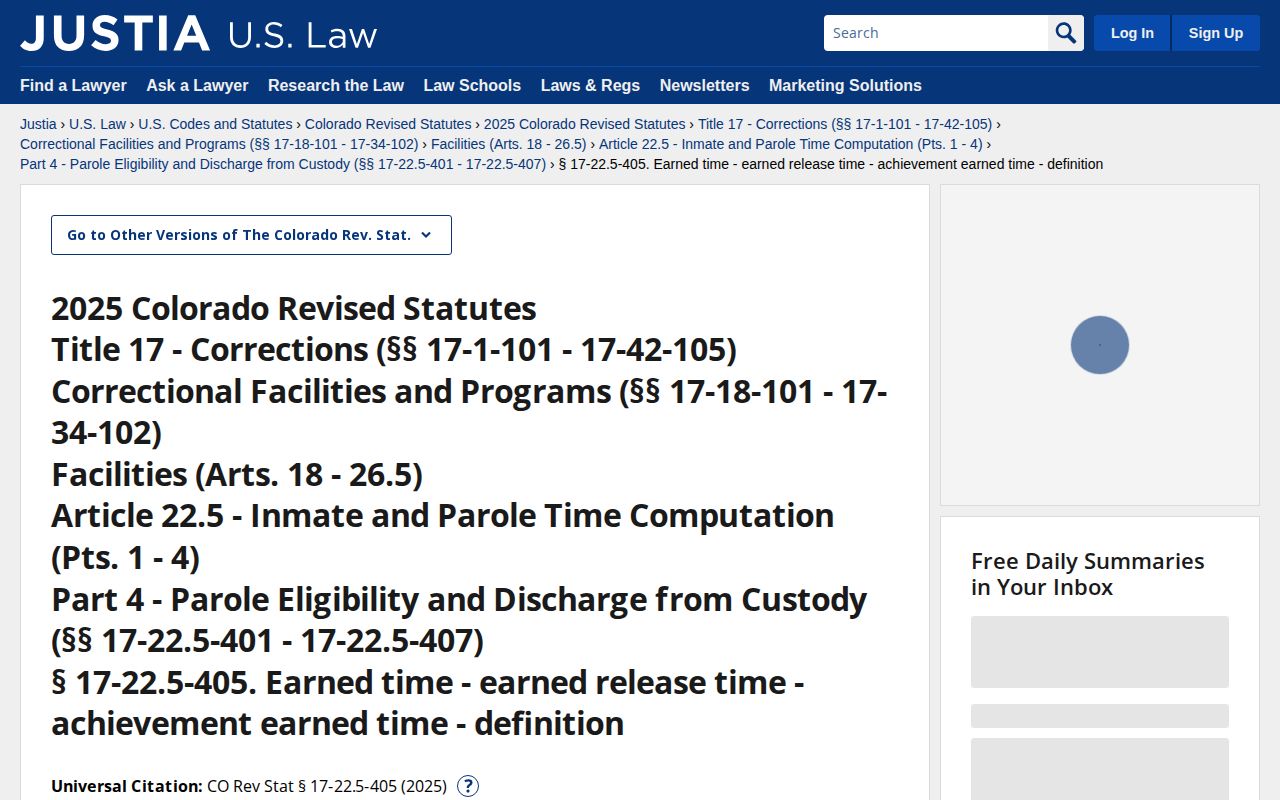
Read that statute beside the CDOC record and the sentencing document because time reductions depend on the case, not just the county where the sentence began.
Weld Work Release Dates
Weld's Work Release FAQ gives a local sentence-computation clue for county cases. It says the sentencing court sets the start date in the intake form or sentencing mittimus. Work Release staff cannot extend that intake date. If the person is already in custody, staff transport the person from the main jail to Work Release after holds clear. The FAQ also says clients may receive sentence-term reductions as provided by Colorado law, with details addressed at orientation or intake.
That means a Weld County projected release date for Work Release is not found by guessing from the booking date. Use the mittimus, the sentence start date, any time-served allowance, the program record, and the court or records office. If the person has a hold, a new case, or a transport order, the date may not operate like an ordinary local release. Work Release is a sentence placement with rules, not a separate public release-date calculator.
Work Release also has logistics that can affect when a person actually moves. The FAQ says in-custody clients may be transported from the main jail to Work Release after holds clear. That is a placement move, not necessarily a final release. If a person is expected to start Work Release but remains in the main jail, check for holds, intake paperwork, court timing, and the program's instructions before assuming the date was wrong.
Why Weld Release Dates Change
Projected dates can change even when the first source was accurate at the time it was created. Earned time can be added or withheld. A court can amend time-served findings. A parole board can grant, deny, defer, or rescind an action. A detainer can block physical release from a facility. A new case can add custody after a person expected to leave. That is why a date should be treated as current agency information, then confirmed close to release.
| Factor | How it can affect release |
|---|---|
| Earned time or good time | May reduce time when statute and agency rules allow it. |
| Discipline or time loss | Can delay a projected date or alter time calculations. |
| Detainers and holds | Can stop community release even when one custody term ends. |
| Court orders | Can change sentence length, time-served findings, or concurrent and consecutive structure. |
| Parole action | Can grant, defer, deny, rescind, or otherwise change the state release path. |
| New custody events | Can add a new booking, warrant, or sentence after an expected release. |
Note: A release from Weld County Jail by transport can end local jail custody while another agency still holds the person.
Colorado 85 Percent Rule
For listed violent offenses committed on or after January 1, 2025, C.R.S. 17-22.5-303.3 states that parole eligibility occurs after 85 percent of the sentence imposed. The listed offenses include serious crimes such as second degree murder, first degree assault, certain kidnapping, sexual assault, first degree arson, first degree burglary, and aggravated robbery. Some earlier listed categories use a 75 percent rule under the same statutory section.
Eligibility should not be worded as release. The parole board may still act on the case, and other facts can affect physical release. The violent-offender statute is shown in the captured source below.
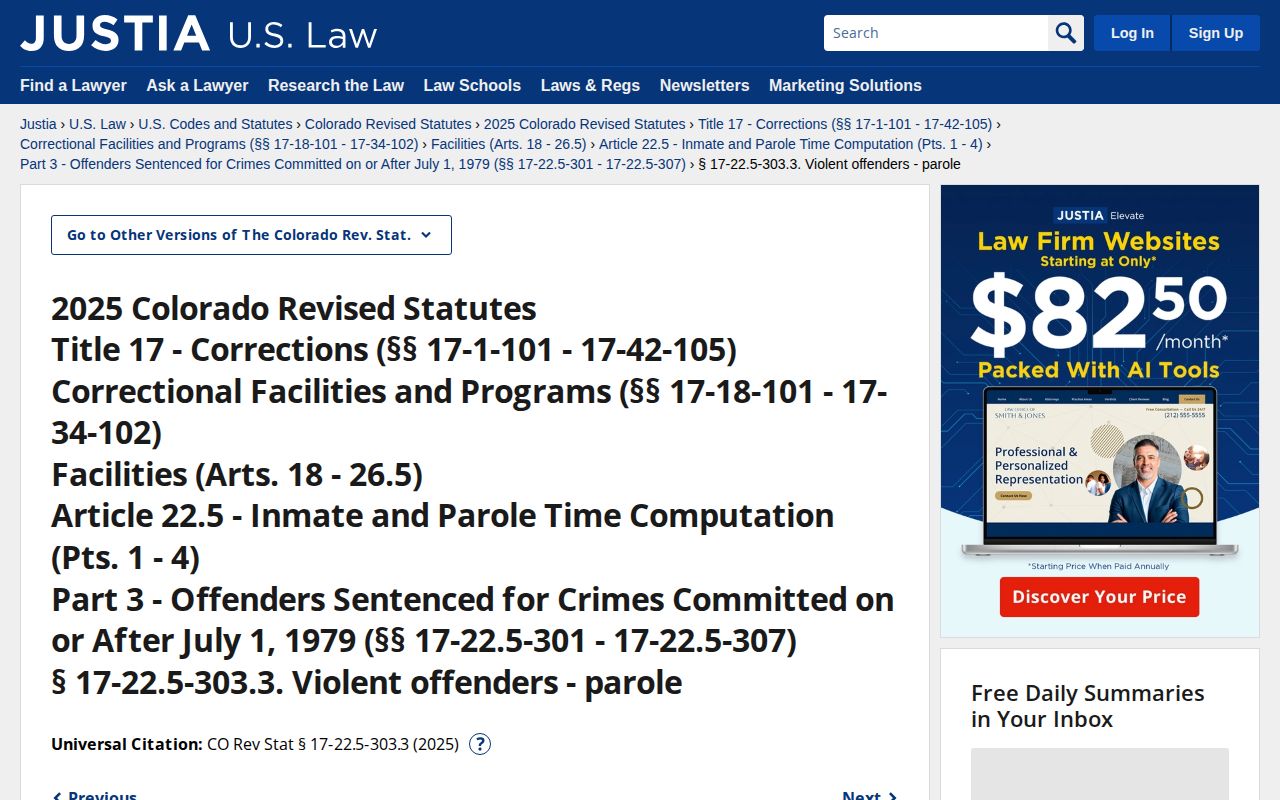
Use the statute only after confirming offense date, offense type, and sentence from the court or CDOC record.
For Weld County readers, this is most relevant after a local case becomes a state prison sentence. The sheriff's release report can show the transport or end of jail custody, but it does not apply the 85 percent rule. CDOC and the state parole framework apply that rule after the sentence enters the state prison system.
Confirm a Weld Release
Close to the expected date, use more than one source. For Weld County Jail, the Daily Inmate Released Report confirms the actual release date and time after the release appears. For a current custody-change alert, use Colorado VINE and register on the person record. For state prison, check CDOC and the parole-board route. For probation or county sentence completion, use the court record or probation office.
Federal cases require the BOP locator. BOP explains that its records cover federal inmates from 1982 to the present and that release dates may change because of federal sentence-time recalculation. Its records explanation also says that a past release date with no facility location means the person is no longer in BOP custody. That federal rule does not replace Weld County jail, CDOC, or court records.
If the person may have been transferred to ICE or another non-county system, a projected county release date may answer only when the Weld booking ended. Immigration custody, federal custody, or another jurisdiction may still exist. Use the release report to establish the Weld custody event, then follow the receiving agency shown by the record, court case, VINE status, or official records response.